
Molecular Diagnostics

QIAGEN
QIAstat-Dx.

Explore
Authorized QIAGEN Distributor in Nepal · JHS Analytic Traders
Syndromic Multiplex PCR

QIAGEN QIAstat-Dx.

Automated, closed-cartridge, real-time multiplex PCR for clinical syndromic infection testing. Sample-to-answer in approximately one hour. CE-IVD marked. Respiratory, gastrointestinal, and meningitis/encephalitis panels — up to 24 pathogens identified per cartridge.

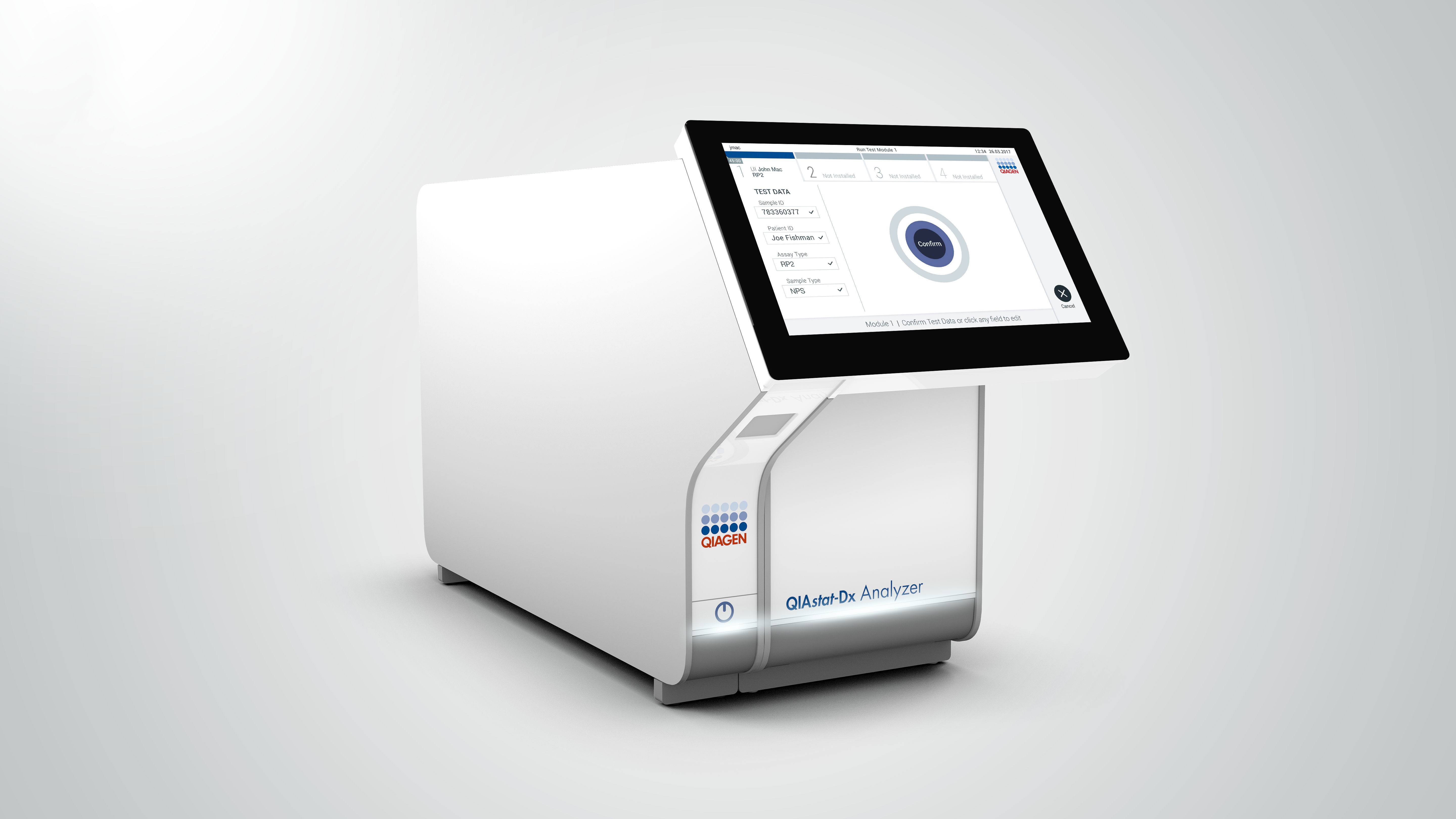
QIAGEN QIAstat-Dx Analyzer — automated syndromic multiplex real-time PCR system

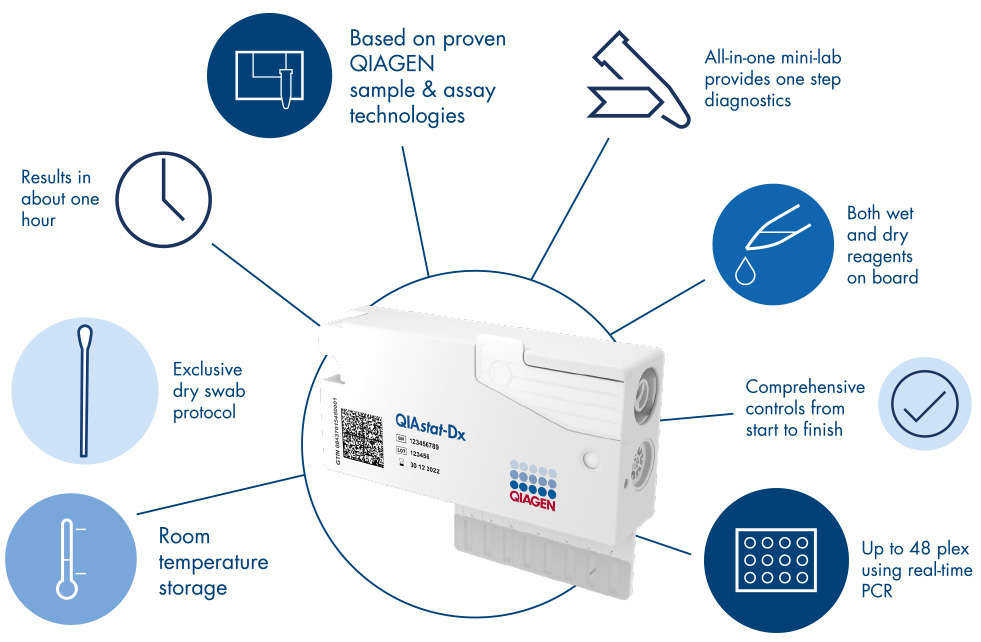
The QIAGEN QIAstat-Dx is an automated syndromic multiplex real-time PCR platform built around a closed disposable cartridge that integrates the entire molecular diagnostic workflow: sample preparation, nucleic acid extraction, real-time PCR amplification, and fluorescence detection. The QIAstat-Dx Analyzer instrument runs the cartridges with a touch-screen interface, modular stacking (multiple analyzer modules per base unit), and bidirectional LIS connectivity. CE-IVD marked.

What "syndromic" means clinically: a single cartridge tests for up to 24 pathogens simultaneously from one patient sample. A respiratory cartridge differentiates SARS-CoV-2, influenza A/B, RSV, and approximately twenty other viruses, atypical bacteria, and respiratory pathogens — in one run, in approximately one hour. This replaces the reference-lab pattern of running multiple individual real-time PCRs (one per suspected pathogen) over four to six hours. For ED triage of febrile illness, paediatric ICU respiratory cases, and infection control, the time savings translate directly into clinical decisions: targeted antibiotics earlier, isolation decisions earlier, discharge decisions earlier.

The closed-cartridge architecture eliminates the dedicated pre-PCR / post-PCR room separation that conventional rt-PCR labs require. The sample, the master mix, the amplification, and the amplicons all stay sealed inside one disposable consumable from sample loading to disposal. Cross-contamination — the structural risk that makes open PCR workflows demand strict workflow segregation — is engineered out. Operator skill required: load the sample, insert the cartridge, press run.

JHS Analytic Traders is the authorized QIAGEN distributor in Nepal. Every QIAstat-Dx installation includes site survey, on-site commissioning, validation cartridges, operator training, LIS integration support, ongoing reagent and consumable supply through QIAGEN-authorized channels, and technical support throughout the product lifecycle.

System Architecture

Closed Cartridge. Four Steps. One Hour.

QIAstat-Dx integrates the entire molecular workflow inside a single disposable cartridge — load the sample, insert the cartridge, press run, read the result. No operator intervention between extraction, amplification, and detection. No sample or amplicon ever leaves the cartridge.

science
Step 01

Sample Loading

Pipette the patient sample (swab, sputum, stool, CSF, or other clinical specimen as per panel) directly into the QIAstat-Dx cartridge. No pre-extraction.

cycle
Step 02

Automated Extraction

Inside the sealed cartridge, the sample is lysed and nucleic acids are purified — no operator handling, no separate extraction kit.

biotech
Step 03

Multiplex rt-PCR

Real-time PCR amplifies up to 24 target sequences simultaneously across multiple fluorescence channels, all in the closed cartridge.

analytics
Step 04

Automated Result

The Analyzer software interprets fluorescence data and outputs a positive / negative / detected report per pathogen — sent to LIS or printed.

Three Syndromic Categories — One Platform

QIAstat-Dx panels cover the three highest-impact syndromic infectious disease categories in clinical practice. Each panel is a separate cartridge; one Analyzer instrument runs all panels. Cartridges are sold separately and ordered per assay.

pulmonology
Flagship Panel

Respiratory Panel

Approximately 21 pathogens — viral, atypical bacterial, and emerging — from a single nasopharyngeal swab.

  • SARS-CoV-2
  • Influenza A/B
  • RSV
  • Adenovirus
  • Rhinovirus
  • Parainfluenza
  • Coronaviruses
  • Metapneumovirus
  • M. pneumoniae
  • B. pertussis
gastroenterology
GI Panel

Gastrointestinal Panel

Bacterial, viral, and parasitic enteric pathogens responsible for acute infectious diarrhoea — from a single stool sample.

  • Salmonella
  • Shigella
  • Campylobacter
  • E. coli (STEC)
  • Norovirus
  • Rotavirus
  • Giardia
  • Cryptosporidium
neurology
CNS Panel

Meningitis / Encephalitis Panel

Bacterial and viral causes of community-acquired meningitis and encephalitis — from CSF, in the same shift the lumbar puncture is performed.

  • S. pneumoniae
  • N. meningitidis
  • H. influenzae
  • L. monocytogenes
  • HSV-1/2
  • VZV
  • Enterovirus
  • CMV

Specific cartridge availability and regulatory status (CE-IVD / FDA) vary by region. JHS confirms current panel availability for Nepal at the quotation stage.

QIAstat-Dx vs. Conventional Reference-Lab rt-PCR

QIAstat-Dx Conventional rt-PCR Lab
Workflow Closed cartridge — sample-to-answerSeparate extraction + master mix + PCR steps
Sample-to-answer time Approximately 1 hour4–6 hours (with separate extraction)
Pathogens per run Up to 24 (multiplex panel)1–4 per run (singleplex / low-plex)
Lab infrastructure required Bench / lab — no separate pre-PCR / post-PCR roomsDedicated molecular lab with workflow segregation
Operator skill Minimal — load & runTrained molecular biology technologist
Cross-contamination risk Structurally eliminated (sealed cartridge)Significant — strict segregation required
LIS integration Bidirectional LIS, automated reportManual data entry typical
Best fitED triage, infection control, outbreak response, paediatric ICUHigh-throughput reference labs and tertiary centres for confirmatory testing
Relevant for Nepal

Where Syndromic PCR Changes Clinical Decisions in Nepal

Nepal's tertiary hospitals see a steady caseload of febrile illness presenting through emergency: SARS-CoV-2, seasonal influenza, RSV, dengue (in season), enteric fever, and bacterial sepsis often present with overlapping symptoms. Without rapid pathogen identification, treatment is empiric — broad-spectrum antibiotics, isolation defaults, longer length-of-stay. Same-shift molecular identification changes that.

QIAstat-Dx is positioned for tertiary teaching hospitals, paediatric ICUs, infection control programmes, reference labs serving multi-hospital networks, and outbreak investigation teams. The platform's clinical impact scales with throughput — the more febrile patients passing through ED triage, the more value extracted from one-hour syndromic results. For community / district hospitals with lower volumes, point-of-care platforms (e.g. Cowin Gene NATBox) are usually the better fit.

For tuberculosis specifically, JHS supplies WHO-prequalified TB platforms separately — QIAstat-Dx's MTB panel availability and prequalification status are not the primary recommendation for accredited TB labs. See TB Diagnostics for that pathway.

Key Parameters

Product TypeAutomated syndromic multiplex real-time PCR system (instrument + disposable cartridges)
Platform ArchitectureQIAstat-Dx Analyzer (instrument) + closed disposable cartridges (one cartridge per sample)
Detection MethodReal-time fluorescence PCR; multi-channel detection for multiplex (up to 24 targets per cartridge)
Sample-to-Answer TimeApproximately 1 hour (panel-dependent)
Operator WorkflowLoad sample, insert cartridge, press run — no pipetting between steps after sample loading
ModularityMultiple Analyzer modules stack onto one base unit — throughput scales with installed modules
ConnectivityTouch-screen interface; bidirectional LIS / HIS connectivity; automated patient-ready report
Available PanelsRespiratory (~21 pathogens incl. SARS-CoV-2), Gastrointestinal (~24 pathogens), Meningitis/Encephalitis (~14 pathogens); additional panels per region
Sample TypesNasopharyngeal swabs, sputum, stool, CSF — specific sample type per panel
RegulatoryCE-IVD marked; specific panels FDA cleared / authorized (varies by region)
Cartridge StorageRefrigerated 2–8°C (per panel; check IFU)
ManufacturerQIAGEN GmbH, Hilden, Germany — ISO 13485 certified

Clinical Settings & Use Cases

Emergency Department Triage

Rapid syndromic identification of febrile and respiratory illness — informs antibiotic decisions, isolation, and admission status before the patient leaves ED.

Hospital Infection Control

Rapid pathogen identification supports cohorting decisions, contact tracing, and outbreak response within tertiary hospital infection prevention programmes.

Paediatric & Adult ICU

Fast multiplex respiratory / GI / meningitis testing for critically ill patients — reduces empiric antibiotic exposure and accelerates targeted therapy.

Reference Labs

Centralised molecular testing for hospital networks — same instrument, multiple panels, scalable throughput via stackable modules.

Outbreak Investigation

Field-deployable syndromic identification during respiratory or enteric outbreaks — same-day pathogen ID supports public health response.

Paediatric Diagnostics

Single-swab, multi-pathogen workup for children with respiratory or GI symptoms — minimises invasive sampling, accelerates discharge decisions.

QIAstat-Dx Is Part of JHS's QIAGEN Portfolio.

JHS Analytic Traders is QIAGEN's authorized distributor in Nepal across the full molecular diagnostics range. Whether you're configuring tertiary hospital syndromic capability, scaling latent TB screening, or building a complete molecular reference lab, we configure the QIAGEN platforms — and the supporting infrastructure — that match your project.

QIAstat-Dx (this page) QuantiFERON TB Gold Plus QIAGEN Real-Time PCR QIAGEN Extraction Kits LIS Integration Sample Storage Biosafety Cabinets Complete Lab Configuration
What is the QIAGEN QIAstat-Dx?

QIAstat-Dx is QIAGEN's automated syndromic multiplex real-time PCR platform. A single closed disposable cartridge integrates sample preparation, nucleic acid extraction, real-time PCR amplification, and fluorescence detection for multiple pathogens in approximately one hour. The QIAstat-Dx Analyzer instrument runs the cartridges with a touch-screen interface, modular stacking (multiple modules per base unit), and LIS connectivity. CE-IVD marked.

Which panels are available?

The principal panels are: Respiratory (~21 pathogens including SARS-CoV-2, influenza A/B, RSV, parainfluenza, adenovirus, coronaviruses, metapneumovirus, atypical bacteria); Gastrointestinal (~24 bacterial, viral, and parasitic enteric pathogens); and Meningitis / Encephalitis (~14 bacterial and viral causes from CSF). Specific cartridge availability and regulatory status vary by region — JHS confirms current panel availability for Nepal at quotation.

How does QIAstat-Dx differ from a conventional rt-PCR workflow?

Conventional rt-PCR labs require separate workflows for nucleic acid extraction, master mix preparation, amplification, and detection — typically across two or three rooms with strict workflow segregation. QIAstat-Dx integrates all of these steps inside a single closed disposable cartridge: load the sample, insert the cartridge, press run. Sample-to-answer is approximately 1 hour vs 4–6 hours conventional. Multiplex detection of up to 24 pathogens in a single cartridge replaces multiple individual PCR runs.

Is QIAstat-Dx WHO-prequalified for tuberculosis testing?

No. QIAstat-Dx panels are not WHO-prequalified for TB diagnosis. The only rapid molecular TB tests with WHO prequalification are Cepheid's Xpert MTB/RIF Ultra and Xpert MTB/XDR. For accredited TB reference labs and National TB Programme procurement, WHO-prequalified TB platforms remain the primary recommendation. QIAstat-Dx is positioned for syndromic infection testing — respiratory, GI, and meningitis/encephalitis — rather than TB-specific diagnostics.

Where in Nepal is QIAstat-Dx best deployed?

QIAstat-Dx is purpose-built for tertiary hospitals, reference labs, and emergency departments running high-stakes syndromic infection diagnostics. Best fits: ED triage of febrile illness (where rapid multi-pathogen identification changes empiric antibiotic choice), hospital infection control programmes, paediatric ICU respiratory diagnostics, outbreak investigation, and reference labs serving multi-hospital networks. The platform's clinical impact scales with throughput — high-throughput tertiary settings extract the most clinical impact from same-shift result turnaround.

Does JHS provide installation, training, and reagent supply?

Yes. As QIAGEN's authorized distributor in Nepal, JHS Analytic Traders provides on-site installation, operator training, validation cartridges for commissioning, ongoing reagent and consumable supply through QIAGEN-authorized channels, LIS integration support, and technical support throughout the product lifecycle.

Building a tertiary syndromic diagnostics capability?

Our technical desk advises on platform selection, panel prioritisation, and tier-appropriate sourcing for ED triage, infection control programmes, paediatric ICU, and reference lab projects across Nepal.

Speak to an expert

Molecular Diagnostic Equipment

Explore →

Cowin Gene NATBox

Explore →

QuantiFERON TB Gold Plus

Explore →

TB Diagnostics

Explore →