
 Featured supplier · Authorized Periclave Distributor in Nepal · JHS Analytic Traders
Hospital-Grade CSSD Autoclaves.
Hospital-grade pre/post-vacuum steam sterilizers for CSSD, OT, and pharmaceutical sterile supply. CE marked, ISO 9001 quality system, designs in compliance with EN 285, HTM 2010, ASME and USFDA documentation requirements. Periclave (our most-deployed CSSD brand for Nepal projects) covers a full chamber range from 79 litres to 6,750 litres — Nuve and Biobase available for lab-scale or alternate-spec requirements.
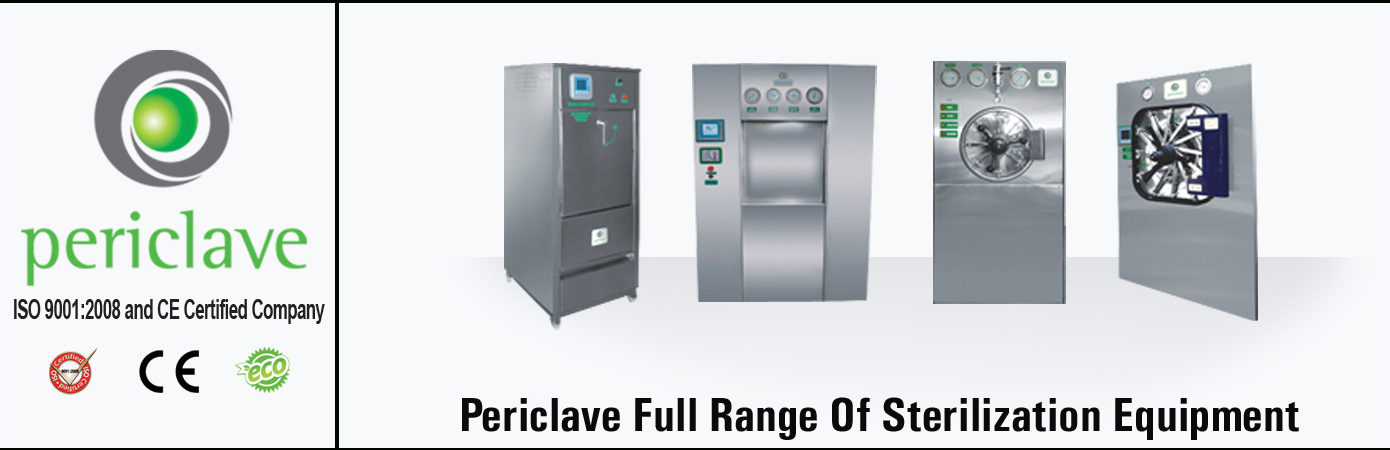
A hospital-grade CSSD steam sterilizer is the centrepiece of CSSD audits at JCI-aspirant Nepali tertiary hospitals — JHS supplies and installs the full range. Our most-deployed brand for Nepal projects is Periclave: a hospital-grade pre/post-vacuum autoclave for surgical instrument reprocessing, OT linen, and pharmaceutical sterile supply, with standard hospital cycle (134 °C / 121 °C), Bowie-Dick test, and vacuum leak rate test supported. CE marked, manufactured under an ISO 9001 quality system, with designs in compliance with EN 285, HTM 2010, ASME, and USFDA documentation requirements. Chamber range from 79 L bench-top to 6,750 L pass-through.
For projects with lab-scale, Class B, or alternate-spec requirements, JHS also stocks Nuve (Turkey — OT and CSSD steam sterilizers) and Biobase (China — Class B and lab autoclaves). Recommendation is matched to project scale, accreditation target, and budget.
JHS Analytic Traders is the authorized Periclave distributor in Nepal. Every installation includes site survey, commissioning, the complete DQ/FAT/IQ/OQ/PQ documentation chain that JCI auditors and hospital biomedical / infection-control reviewers inspect, operator training, and ongoing maintenance — a fully validated CSSD installation, not just equipment delivery.
Three Door Types — Specified Per Project
Cylindrical Hinge Door
Radial-locking hinge door. Best for primary clinics, dental practices, microbiology labs.
Rectangular Hinge Door
Better load packing density per footprint. Standard for district and provincial hospital CSSDs.
Sliding-Door Pass-Through
Double-door pneumatic. Separates dirty/clean zones — HTM 2010 layout for tertiary CSSDs and JCI-aligned hospital workflows.
How a Pre-Vacuum Steam Sterilization Cycle Runs
Load & Seal
Wrapped instruments and packs are loaded into the chamber. Door is sealed via radial-locking hinge or pneumatic sliding mechanism.
Pre-Vacuum
Pre-vacuum pulses through the inbuilt vacuum pump remove air from the chamber, ensuring even steam penetration into porous loads and lumens.
Sterilize
Saturated steam at standard hospital cycle conditions destroys microbial life, including bacterial spores. PLC or microprocessor maintains time, temperature, and pressure.
Post-Vacuum Dry
Post-vacuum pulses remove residual moisture from the load, returning instruments dry and ready for sterile packaging.
Validate & Release
Cycle parameters are recorded by the optional printer or HMI. Biological indicator results (e.g. Terragene Bionova) confirm sterility before release.
The CSSD Workflow — Dirty to Clean Zone
A modern Central Sterile Supply Department is laid out as a one-way flow from the dirty zone (where used instruments arrive) through a sterilization barrier to the clean zone (where sterilized items are stored and dispatched). The pass-through autoclave is the physical boundary that separates these zones — instruments are loaded from the dirty side and unloaded on the clean side, never crossing back. This layout is required by infection-control standards and is what auditors verify during JCI accreditation.
Receipt & Sorting
Used instruments arrive from OT, wards, and clinics. Logged, sorted by type, gross debris removed.
Cleaning & Decontamination
Manual pre-rinse + automated thermal washing and disinfection. Validated cycle removes organic load and reduces microbial count before sterilization.
Inspection & Packaging
Cleaned instruments inspected for damage and assembled into surgical sets. Wrapped in sterilization wrap or loaded into sterilization pouches.
Steam Sterilization
Pre-vacuum steam sterilization at the standard cycle profile. The double-door pass-through autoclave physically separates the dirty and clean zones.
Sterile Storage
Sterilized packs cooled, validated against batch records and biological indicator results, then stored in a controlled clean storage area.
Distribution
Sterile packs released and dispatched to OT, wards, ICU, and clinical departments via dedicated clean trolleys. Batch records archived.
CSSD Autoclave vs. Lab Bench-Top Autoclave
| CSSD-Grade Autoclave | Generic Lab Autoclave | |
|---|---|---|
| Intended use | Hospital sterile supply, surgical instruments, OT | Lab media, glassware, microbiology waste |
| Pre & post vacuum | ✓ Pre and post-vacuum pulses (lumen and porous loads) | ✗ Gravity displacement only |
| Door configuration | ✓ Single or double-door pass-through | Single door only |
| Accreditation documentation | ✓ Full DQ/FAT/IQ/OQ/PQ chain (JCI, USFDA-aligned) | ✗ Typically not provided |
| Cycle types | Multiple programmed cycles (instrument, textile, prion, liquid) | One or two basic cycles |
| Chamber material | SS 316 / SS 316L/Ti / SS 304 | Typically SS 304 or aluminium alloy |
| Validation support | ✓ Bowie-Dick tests, biological indicators, printer/archive | Usually basic chart recorder |
| Suitable for surgical instruments | ✓ Yes — designed for it | ✗ Not recommended |
Technical Specifications View full spec table
| Product Type | CSSD Steam Sterilizer / Autoclave (hospital-grade) |
| Manufacturer | Periclave |
| Quality System | ISO 9001 certified |
| Regulatory | CE marked; designs in compliance with EN 285, HTM 2010, ASME (pressure-vessel fabrication), and USFDA documentation requirements |
| Chamber Volume Range | 79 L (P79C) to 6,750 L (P6750R/SD) |
| Door Configurations | Single or double-door pass-through; pneumatically sliding or radial-locking hinge |
| Chamber Materials | SS 316, SS 316L/Ti, SS 304 (specified per application) |
| Steam Generation | Inbuilt electric generator OR external steam boiler input |
| Vacuum System | Pre-vacuum and post-vacuum pulses via inbuilt vacuum pump |
| Control System | Manual cycle (multi-port valve) OR automatic (Microprocessor / PLC); optional touch-screen HMI & printer |
| Validation Documentation | DQ, FAT, IQ, OQ, PQ, MoC, calibration, test worthiness — JCI / USFDA-aligned |
| Project Engineering | Site survey, foundation, electrical, plumbing diagrams supplied with each installation |
| Service & Training | On-site commissioning, operator training, ongoing maintenance via JHS service team |
Sectors & Applications
Hospital CSSDs
Surgical instrument sterilization, OT linen, supply pack reprocessing across district, provincial, and tertiary hospitals.
Pharmaceutical Production
Sterile dosage manufacturing — vial sterilization, LVP/SVP liquid sterilization, sterile bulk equipment.
Tissue Culture & Biotech Labs
Aseptic media preparation, glassware sterilization, validation cycles for QC and research workflows.
Biomedical Waste Treatment
Biomedical waste autoclaving meeting Nepal Solid Waste Management and biomedical waste rules.
Periclave Is One Part of the Full CSSD JHS Builds.
JHS supplies the complete CSSD workflow — steam autoclaves (Periclave as primary, with Nuve and Biobase as alternative-spec options), washer-disinfectors, ultrasonic cleaners, biological indicators (Terragene Bionova), and sterile storage. Tell us your bed strength, surgical throughput, accreditation target, and budget — we'll configure the right department.
Is the autoclave compliant for Nepal hospital accreditation audits?
Yes. The autoclave carries the CE mark and is manufactured under an ISO 9001 quality system, with designs in compliance with EN 285 (European standard for large steam sterilizers), HTM 2010 (UK Department of Health Health Technical Memorandum for sterilizers), ASME pressure-vessel requirements, and USFDA documentation expectations. Every installation includes the complete DQ, FAT, IQ, OQ, PQ documentation, MoC test certificates, calibration certificates, and test worthiness certificates that JCI auditors and Nepal hospital accreditation reviewers inspect.
What sizes of CSSD autoclaves are available?
Periclave manufactures a wide CSSD range — from the 79 L P79C bench-top sterilizer for small clinics and labs, through mid-size hinge-door models (250–810 L) for district and provincial hospitals, to large rectangular sliding-door pass-through units (1,000–6,750 L) for tertiary care, university teaching hospitals, and pharmaceutical production. JHS also stocks Nuve (Turkey) and Biobase (China) for lab-scale or alternate-spec requirements. Custom sizes available on request.
What is the difference between hinge door and sliding door autoclaves?
Hinge door autoclaves use a radial locking hinge mechanism — robust, simpler to service, cost-effective. Best for small to mid-size CSSDs and labs. Sliding door autoclaves use a pneumatically operated sliding mechanism and are typically configured as double-door pass-through units, separating the dirty and clean zones of a CSSD as required by HTM 2010 infection-control standards and as inspected by JCI auditors. Pass-through sliding door units are the standard for tertiary hospital CSSDs and pharmaceutical sterile manufacturing.
Does JHS provide installation, training, and after-sales support for Periclave?
Yes. As Periclave's authorized distributor in Nepal, JHS Analytic Traders provides the complete project lifecycle: site survey, installation drawings (electrical, plumbing, foundation), commissioning, validation documentation (DQ/FAT/IQ/OQ/PQ), operator training, and ongoing maintenance through Periclave's network of trained engineers. Spare parts and consumables are stocked through our authorized supply chain.
Can Periclave autoclaves be used for pharmaceutical sterilization?
Yes. Periclave manufactures sterilizers for both hospital CSSD and pharmaceutical applications, including bung processing sterilizers, super heated water sterilizers for sterile liquid (LVP/SVP) production, and dedicated pharma R&D, process, and production division equipment. All units are constructed in SS 316, SS 316L/Ti, or SS 304 as per the application's regulatory requirement.
Does the autoclave support biological indicator validation?
Yes. The autoclave is designed to support routine cycle validation including Bowie-Dick test cycles and biological indicators. JHS supplies Terragene Bionova self-contained biological indicators alongside the autoclave installation as part of the complete CSSD validation programme — the standard approach for JCI and USFDA-aligned hospital accreditation.
Planning a CSSD upgrade or new build?
Our technical desk advises on chamber sizing for your bed strength, room layout, and accreditation target — and configures the full CSSD workflow including washer-disinfectors, biological indicators, and sterile storage.
Speak to an expert