 PAMAS SVSS · Nepal
PAMAS SVSS Liquid Particle Counter.
Precision syringe sampling. Light-extinction sensing. Method-ready results.
The PAMAS SVSS is a laboratory particle counter for aqueous and low-viscosity pharmaceutical fluids, with configurable sensors and PAMAS USP software.
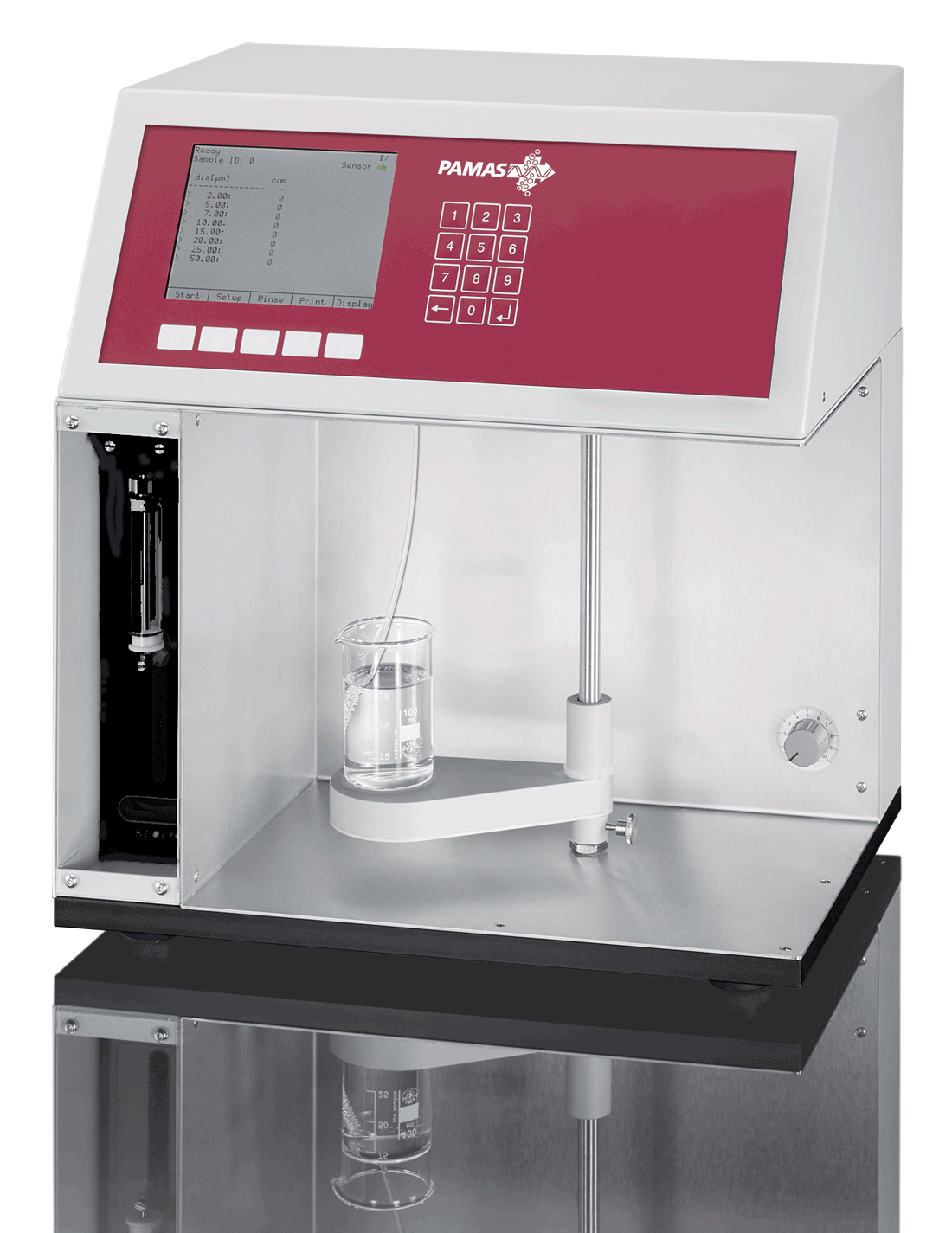
The PAMAS SVSS counts and sizes particles suspended in liquids. Its stepper-motor-driven precision syringe delivers a defined sample volume through a calibrated light-extinction sensor. Each particle produces a signal assigned to a size channel, creating a repeatable result for pharmaceutical and critical low-viscosity liquid samples.
Precision syringe delivery
A stepper-motor-driven syringe meters a programmed sample volume, so every run measures a defined amount of liquid.
Calibrated light-extinction sensors
The sensor is chosen around the smallest particle size and the concentration your method needs. PAMAS lists the current options in the brochure.
Pharmacopeial workflows
PAMAS USP software supports methods including USP <787>, <788> and <789>, plus 21 CFR Part 11 compliant data handling.
PAMAS SVSS at a Glance
Sample volume, size channels, sensor ranges and concentration limits are published by PAMAS in the SVSS brochure below. The fitted sensor is part of the analytical specification, so the purchase brief should state the sample, available volume, required size thresholds, expected concentration and applicable method.
A controlled measurement path in a laboratory system
The SVSS combines programmed syringe delivery, a calibrated light-extinction sensor and method-based software evaluation. The workflow keeps sample volume, flow and particle-size channels defined from measurement through reporting.
Define the method
Set the measurement volume and size channels for the sample and applicable laboratory procedure.
Control the sample
Use a clean vessel and suitable preparation. The integrated magnetic stirrer supports consistent suspension when required.
Meter through the sensor
The stepper-motor syringe moves a defined volume through the calibrated sensor at controlled flow.
Count, size and report
Each light-extinction pulse is assigned to a size channel, then PAMAS software evaluates and records the result.
Where Liquid Particle Counting Is Used
Parenteral Preparations
Sub-visible particle testing for small- and large-volume injectable preparations using the applicable pharmacopeial workflow.
Water Samples
Particle assessment in suitable aqueous samples where particulate cleanliness must be measured and documented.
Suspensions
Controlled syringe sampling for suitable low-viscosity suspensions within the configured sensor and concentration limits.
Cleaning Solvents
Particle counting in compatible low-viscosity cleaning solvents used in cleanliness and process-control workflows.
Configuring the PAMAS SVSS in Nepal
For pharmaceutical quality-control laboratories, the procurement brief should identify the exact sample matrix and method before quotation. JHS coordinates the SVSS sensor, software and documentation requirements with PAMAS, then confirms installation, training, qualification and service scope for the project.
Product documentation & media
A PAMAS product overview of the SVSS laboratory system for particle counting in aqueous and low-viscosity liquids.
One liquid particle counter, configured around the sample and method.
JHS supplies the PAMAS SVSS for aqueous and low-viscosity laboratory samples. The quotation is configured around the required sensor, size channels, sample volume, USP software and project documentation.
PAMAS SVSS in Nepal
Is the PAMAS SVSS an airborne cleanroom particle counter?
No. The PAMAS SVSS measures particles suspended in liquids. Airborne cleanroom classification requires a dedicated airborne particle counter, which is a different instrument class. Confirm whether your sample is air or liquid before requesting a quotation.
What samples can the PAMAS SVSS measure?
PAMAS SVSS is designed for aqueous and low-viscosity pharmaceutical fluids. Published applications include parenterals, water, suspensions and cleaning solvents.
What sample volumes can the PAMAS SVSS handle?
Sample volume is programmable. PAMAS publishes the current minimum and maximum volume in the SVSS brochure, which you can download above.
What particle-size ranges are available?
It depends on the sensor fitted. PAMAS offers several sensors for the SVSS and lists their size ranges in the brochure. The right sensor follows from the smallest particle size your method reports and the expected particle concentration.
Which methods and standards can the system support?
Depending on configuration, the PAMAS SVSS and PAMAS USP software support workflows including USP <787>, <788> and <789>, Ph. Eur. 2.9.19 and 2.9.53, and relevant ISO 21501 calibration standards.
What information does JHS need for a quotation?
Provide the sample name, viscosity, likelihood of gas bubbles, available sample volume, expected particle range and concentration, routine throughput, applicable method and software or qualification requirements.